

Saurav Das and Ashutosh Ranka to Remain in Jail as SEM Extends Judicial Custody by Two Days
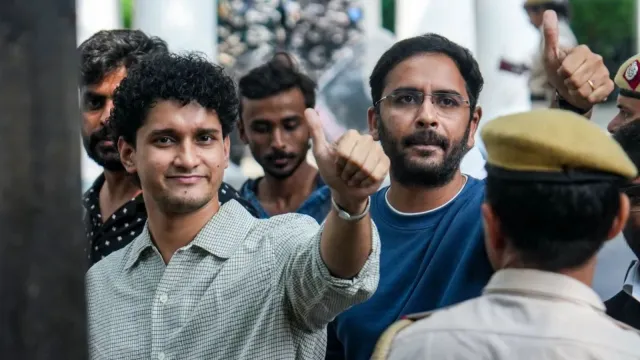
Cockroach Janata Party (CJP) leaders Saurav Das and Ashutosh Ranka will remain in Tihar Jail after a Special Executive Magistrate (SEM) extended their judicial custody by two more days on Monday. The decision came in connection with a protest at Jantar Mantar, Delhi, where the two leaders allegedly entered a barricaded area despite restrictions and breached conditions linked to an earlier peace bond.
The Delhi Police had reportedly sought a further five-day extension, citing concerns about maintaining peace and public order. However, the SEM granted an extension of two days, meaning that the leaders are expected to be produced before the authority again on Wednesday, October 21.
The development marks another turn in a case that has attracted attention because of the CJP's protests against the Special Intensive Revision (SIR) of electoral rolls and its demand for the resignation of Chief Election Commissioner Gyanesh Kumar.
While the police have raised concerns about the alleged violation of restrictions, the party has questioned the circumstances surrounding the detention and the delays in the release process. The latest order keeps the two leaders in custody while the legal proceedings continue.
Saurav Das and Ashutosh Ranka Custody Extended: What Happened on Monday?
The latest development came after the initial five-day period of judicial custody of Saurav Das and Ashutosh Ranka reached its end. Both leaders were produced before the Special Executive Magistrate at Mandir Marg in Delhi on Monday for further proceedings.
During the hearing, Delhi Police sought additional time in custody. According to reports, the police argued that releasing the two leaders could create concerns regarding peace and tranquillity, particularly in view of the continuing protest activity associated with the party.
The SEM subsequently ordered a two-day extension rather than the five days reportedly requested by the police.
Following the order, Das and Ranka were taken back to Tihar Jail. Their next appearance is expected on October 21, when the immediate question of their custody may be considered again.
The order is the latest step in a preventive legal proceeding connected to allegations of entering a restricted protest area and violating conditions imposed earlier. It does not, by itself, establish the guilt of either leader.
For the CJP, the extension means that two of its prominent members will remain unavailable to participate directly in the party's activities while the case continues. For the authorities, the matter remains connected to enforcing restrictions and preventing potential disturbances.
Why Were CJP Leaders Saurav Das and Ashutosh Ranka Arrested?
The case dates back to October 13, when Delhi Police detained Das and Ranka in connection with a protest at Jantar Mantar. Reports state that the two leaders allegedly crossed locked gates or barricades to enter the site, which had recently been removed from the list of designated protest locations.
The incident reportedly involved other CJP members as well. According to news reports, 12 additional party members were also associated with the alleged entry and obstruction of police personnel.
The authorities have maintained that the alleged actions violated restrictions governing demonstrations at the location. Police have also referred to earlier peace bonds and conditions under which the leaders had agreed to maintain peace and good behaviour.
On October 14, the two leaders were sent to five days of judicial custody. With that period ending, the authorities sought a further extension, resulting in Monday's order.
The distinction between an allegation and a finding of guilt remains important. The police version forms part of the case, while the leaders and their party have disputed aspects of the action taken against them. The legal process will determine the consequences of the proceedings.
What Is a Special Executive Magistrate and Why Is the Case Before the SEM?
A Special Executive Magistrate is an executive magistrate assigned duties under the applicable legal framework. Executive magistrates can exercise certain preventive powers intended to help maintain public order and address situations where authorities believe there may be a risk of a breach of peace.
The proceedings involving Das and Ranka have been reported in the context of preventive detention and peace-bond conditions. This is an important detail because such proceedings are not necessarily the same as a criminal trial in which a court determines guilt after examining the evidence.
In this case, the immediate issue has been whether the two leaders should continue to remain in custody in view of the police's stated concerns and the circumstances surrounding the protest.
The police reportedly sought five additional days, but the SEM allowed only two. The next proceedings are therefore important for understanding whether custody will continue or whether the leaders will be released subject to any applicable conditions.
The legal position should not be simplified into a claim that the custody extension proves that the allegations are true. A custody order concerns the immediate legal status of the individuals and must be understood within the relevant proceedings.
Why Was Delhi Police Seeking More Time in Custody?
According to reports, Delhi Police argued that the release of Das and Ranka could lead to further violations of restrictions or create problems related to peace and tranquillity.
The authorities reportedly pointed to the earlier peace bonds and the alleged decision to resume protest activity despite those commitments. From the police perspective, these circumstances were relevant to the question of whether the two leaders should remain in custody.
The wider context also matters. The CJP has continued to campaign on electoral-roll revision issues and has called for the resignation of Chief Election Commissioner Gyanesh Kumar. The party's protest activity has therefore remained politically sensitive.
However, the police's concerns should be presented as the authorities' position rather than an established prediction of what would happen if the leaders were released. The SEM's decision to grant a two-day extension, instead of the longer period requested, is the operative order at this stage.
The coming proceedings may provide further clarity on the conditions, if any, under which the leaders could be released and on how the authorities intend to handle the matter.
CJP Challenges the Handling of the Detention and Release Process
The custody case has also become contentious because of the CJP's objections to how the proceedings have been handled.
Party representatives have alleged that the release process was delayed and that objections were raised over the surety documents submitted for the leaders. The party has described the process as unfair and has questioned the reasons given for keeping its members in custody.
These are allegations made by the party and should be distinguished from the position taken by the authorities. Reports have also stated that police cited concerns relating to the surety process and threats allegedly received by the magistrate handling the matter.
The controversy became more complicated after the magistrate previously handling the bail proceedings reportedly recused himself after citing threats to his life. Police registered a report concerning the alleged threats.
The issue has consequently expanded beyond the original protest incident. It now includes questions about the pace of legal proceedings, the processing of surety documents and the security of officials involved in the case.
At the same time, these developments do not automatically establish that any party deliberately obstructed the release process. Each allegation requires proper attribution and verification through the relevant records and proceedings.
The immediate outcome remains clear: the SEM extended the leaders' judicial custody by two days on October 19.
What Is the Cockroach Janata Party Protesting Against?
The CJP's protest campaign is linked to the Special Intensive Revision of electoral rolls, commonly referred to as SIR.
Electoral-roll revision is the process through which voter lists are examined and updated. Such exercises can involve checking voter details, correcting entries, removing ineligible or duplicate names and ensuring that eligible voters are properly listed.
The process can become politically contentious when questions arise about the accuracy of deletions, the ability of voters to restore their names and whether all eligible citizens can participate without unnecessary difficulty.
The CJP has raised concerns about the revision process and has demanded the resignation of Chief Election Commissioner Gyanesh Kumar. Its campaign has brought electoral-roll issues into the centre of its public demonstrations.
The allegations raised by the party should not automatically be treated as proven irregularities. Similarly, the existence of a dispute does not remove the importance of examining concerns about voter registration, administrative procedures and access to electoral participation.
The Election Commission's position and any official data or responses should be considered alongside the claims made by political groups. A balanced assessment requires evidence rather than relying exclusively on statements from either side.
For now, the custody proceedings involving Das and Ranka remain connected to the protest incident and the enforcement of restrictions, rather than constituting a final determination of the broader electoral-roll dispute.
Why Has Jantar Mantar Become Central to the Controversy?
Jantar Mantar has long been associated with demonstrations, public campaigns and political demands in New Delhi. Its location in the national capital has made it a prominent venue for groups seeking attention from the government, the media and the wider public.
However, the ability to hold demonstrations at a particular location depends on the applicable rules, permissions and restrictions. Authorities can regulate public gatherings to address security, traffic, access and public-order concerns.
The recent dispute centres partly on the reported change in the status of Jantar Mantar as a designated protest venue. According to reports, the site had been denotified for such demonstrations, and the police allege that the CJP members entered a barricaded area despite the restrictions.
For protesters, the choice of location can be central to the message they want to communicate. For law-enforcement agencies, compliance with the applicable rules remains a key concern.
The challenge is to distinguish the right to express political disagreement from the question of whether a specific demonstration complied with the rules governing its location.
The legal proceedings involving the CJP leaders will address the immediate allegations against them. The broader public debate also raises questions about how protest restrictions are communicated and enforced, and how peaceful political expression can be accommodated within the applicable legal framework.
What Happens Next in the Saurav Das and Ashutosh Ranka Case?
The next important date is October 21, when the two leaders are expected to be produced again before the relevant authority following the two-day extension.
The proceedings may determine whether their custody is extended further or whether they can be released under applicable legal conditions. Any decision will depend on the orders passed by the competent authority and the arguments presented during the proceedings.
The party has indicated that it disputes the grounds for continued custody. Reports have also carried objections from the legal team concerning the handling of the case, with the possibility of challenging the order before a higher court.
Readers should avoid assuming that the next hearing will necessarily result in release or another extension. Until an official order is available, the outcome remains uncertain.
The next stage will also be relevant for clarifying the status of the surety process, the allegations regarding the earlier peace bond and the authorities' stated concerns about public order.
As the case develops, verified updates from the relevant court or magistrate proceedings will be more reliable than unconfirmed claims circulating on social media.
What the Custody Extension Means for the CJP
The continued detention of Das and Ranka creates an immediate challenge for the CJP, which has been using protests to draw attention to its demands over electoral-roll revision.
When prominent members of a political movement are in custody, the organisation may need to rely more heavily on its remaining representatives, supporters and legal team. Public communication and coordination can become more difficult, particularly when legal proceedings are moving quickly.
At the same time, the custody order does not mean that the party's wider campaign has ended. Its demands and objections can continue to be debated publicly, subject to the applicable law.
The next steps taken by the party will likely depend on the outcome of the proceedings, the advice of its lawyers and any conditions imposed by the authorities.
The case also demonstrates how a protest-related dispute can develop into a broader debate involving public order, political expression and the functioning of legal procedures.
For observers, the key questions are whether the authorities follow the required legal process, whether the party's objections receive proper consideration and whether future proceedings provide clarity about the leaders' status.
Why the Case Is Receiving Attention
The case has attracted attention for several reasons. First, it involves leaders of a political group engaged in a campaign over electoral-roll revision, an issue closely connected to voter participation and public confidence in elections.
Second, the custody extension follows allegations of entering a restricted protest area and breaching earlier peace-bond conditions. This has brought the enforcement of protest restrictions into focus.
Third, the dispute over the release process, surety documents and reported threats to the magistrate has added another layer to the proceedings.
These developments have generated competing accounts from the police and the party. The authorities have cited public-order concerns, while the CJP has criticised the handling of its leaders' detention.
The most responsible way to follow the case is to separate confirmed procedural developments from disputed claims. The two-day extension is the latest reported order; the allegations concerning the protest and the claims surrounding the release process must continue to be attributed to the parties making them.
As the proceedings move forward, the next official order should provide greater clarity on the immediate legal position of Das and Ranka.
टिप्पणियाँ (0)
टिप्पणी करने के लिए लॉग इन करें।