Brazil Election 2026: Lula Defeats Flávio Bolsonaro to Win Historic Fourth Term
Brazil's President Luiz Inácio Lula da Silva defeats Flávio Bolsonaro to secure a historic fourth presidential term. Explore the election results, his dramatic comeback, Brazil's political divide and the challenges ahead.
 charchachowk
Brazil Election 2026: Lula Defeats Flávio Bolsonaro to Win Historic Fourth Term
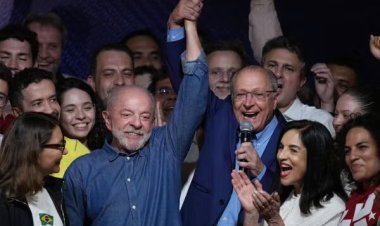
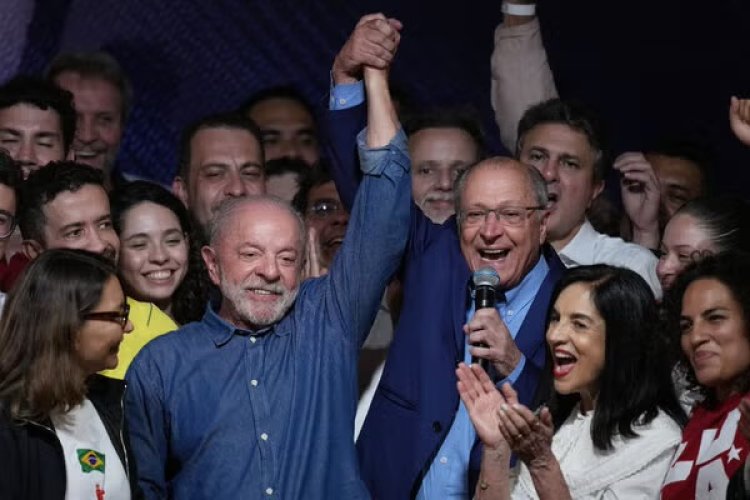
Brazil has delivered a major political surprise. President Luiz Inácio Lula da Silva has defeated right-wing senator Flávio Bolsonaro in the country's presidential runoff, securing an unprecedented fourth, non-consecutive term in office. The result marks a remarkable comeback for the 80-year-old leader, who had finished behind his rival in the first round of voting.
The victory, announced on October 25, 2026, gives Lula another opportunity to shape Brazil's economic and social policies. However, his next term is expected to bring significant political challenges, particularly as conservative parties hold substantial influence in Congress.
Lula Wins With 51.79% of the Vote
According to Brazil's Superior Electoral Court, Luiz Inácio Lula da Silva received 51.79% of valid votes, while Flávio Bolsonaro secured 48.21%.
The final result confirmed a closely contested election in Latin America's largest country. Lula's victory came after a difficult first round on October 4, when Flávio Bolsonaro received approximately 47% of the vote against Lula's 45%. Neither candidate crossed the threshold required to win outright, forcing the election into a second round.
The reversal in the runoff made the result particularly significant. Lula became the first presidential candidate in Brazil's modern democratic history to finish second in the first round and subsequently win the presidency in the runoff.
Official results from Brazil's electoral authority confirmed Lula's victory, ending weeks of intense political competition and uncertainty.
Who Is Luiz Inácio Lula da Silva?
Lula's political journey is closely connected to Brazil's labour movement and the country's long-running debate over poverty, inequality and economic opportunity.
Born on October 27, 1945, in the Brazilian state of Pernambuco, Lula grew up in a poor family before moving to São Paulo as a child. He later became a metalworker and rose to prominence as a trade union leader during the final years of Brazil's military dictatorship.
His involvement in labour activism helped establish his reputation as a political voice for industrial workers. In 1980, he helped found the Workers' Party, known in Portuguese as the Partido dos Trabalhadores, or PT.
Lula ran for president several times before winning the 2002 election. He took office in January 2003 and served two consecutive terms until the end of 2010.
His political career subsequently experienced major setbacks, including corruption convictions that were later annulled. He returned to the presidency in 2023 after defeating Jair Bolsonaro in the 2022 election.
His latest victory adds another chapter to a political career that has spanned more than four decades.
Why Is Lula's Fourth Term Historic?
Lula's victory is significant because he has returned to office for a fourth presidential term after previously serving from 2003 to 2010 and again from 2023.
His political survival also comes at a time when several Latin American countries have experienced growing support for conservative and right-wing political movements.
The election therefore attracted attention beyond Brazil's borders. Lula has positioned himself internationally as a supporter of social welfare, workers' rights, environmental protection and multilateral cooperation.
His opponents, meanwhile, have criticised aspects of his government's spending policies and economic management. The election result shows that Brazil remains divided over the direction its economy and political institutions should take.
Lula's victory does not mean that these disagreements have disappeared. Instead, his fourth term begins with a renewed mandate but also with continued pressure to address voters' concerns.
How Did Lula Make His Comeback?
The cost of living played an important role in the election campaign. Inflation concerns, household debt, employment opportunities and the cost of everyday essentials remained important issues for voters.
Lula's campaign focused on reducing poverty, protecting social programmes and improving conditions for working families. He also promoted proposals involving workers' rights and public transport.
During the final stages of the campaign, he sought to strengthen his appeal among lower-income voters and those who had not supported him in the first round.
Flávio Bolsonaro, the son of former president Jair Bolsonaro, campaigned on a conservative platform that emphasised public security, economic concerns and a tougher approach to crime.
The two candidates presented different approaches to the country's future, turning the runoff into a contest over both economic priorities and Brazil's political direction.
Lula's ability to recover from his first-round defeat ultimately proved decisive.
Who Is Flávio Bolsonaro?
Flávio Bolsonaro is a Brazilian senator and the son of former president Jair Bolsonaro, who governed Brazil from 2019 to 2022.
He emerged as the principal candidate representing the Bolsonaro political movement in the 2026 presidential election. His campaign attracted voters who supported conservative policies, stricter law enforcement and a different approach to economic management.
His political identity is closely associated with the broader movement built by his father, whose presidency reshaped Brazil's political landscape and intensified divisions between left-wing and right-wing voters.
Jair Bolsonaro's legal troubles also remained part of the political background. He was sentenced to 27 years in prison over his role in a plot to overturn the 2022 election result, according to reporting by Reuters.
Flávio's defeat means that the Bolsonaro family will not take control of the presidency in this election. However, the result does not automatically remove the family's influence from Brazilian politics, particularly given the continued strength of conservative parties and their supporters.
What Challenges Will Lula Face in His Fourth Term?
Winning an election is one challenge; governing a deeply divided country is another.
Lula's next term is expected to involve difficult decisions on public spending, economic growth, interest rates and household debt. Although his campaign emphasised social protection and economic opportunity, his government will have to balance these priorities with concerns about fiscal stability.
Brazil's political landscape presents another obstacle. Conservative and right-wing parties have strengthened their position in Congress, giving the opposition considerable influence over legislation.
This could make it more difficult for Lula to pass proposed reforms, expand social programmes or secure support for his legislative agenda.
Public security will also remain an important issue. Crime and concerns about personal safety have featured prominently in Brazilian politics, and the government will face pressure to demonstrate progress.
At the same time, the administration will be expected to maintain employment opportunities, protect vulnerable households and respond to the concerns of voters who remain sceptical of its economic policies.
The extent to which Lula can build support across political divisions will be an important factor in determining the direction of his fourth term.
What Does the Result Mean for Latin America?
Brazil is the largest country in Latin America by population and one of the region's most influential economies. Its presidential elections can therefore affect regional diplomacy, trade, environmental policy and relations with major global powers.
Lula has generally supported stronger international cooperation and has advocated a more prominent role for developing countries in global institutions. His government has also emphasised the protection of the Amazon rainforest and the importance of addressing climate change.
His victory represents a setback for the Bolsonaro political movement and comes amid a broader regional debate over the balance between progressive and conservative governments.
International attention will now turn to whether Lula can maintain Brazil's diplomatic relationships while pursuing his domestic priorities.
Relations with the United States may also attract attention, particularly because of political differences between Lula and US President Donald Trump and the latter's reported support for the Bolsonaro political camp.
However, the long-term impact of the election will depend on policy decisions, economic developments and diplomatic engagement rather than the result alone.
Election Day Controversy and Questions About Voting Access
The runoff was also accompanied by controversy over access to polling stations and the timing of the vote.
Reports emerged that public transport had been suspended or reduced in some areas, raising concerns about whether some voters could reach polling places easily. The campaigns requested additional time for voting amid transport concerns and heavy rain in parts of the country.
Voting hours were extended by two hours, a decision that became a point of dispute during the final stages of the election.
The Bolsonaro campaign indicated that it would challenge the extension, while Lula's campaign argued that measures were needed to ensure voters could exercise their rights.
These developments underline the importance of transparent election administration and equal access to polling facilities. Any formal legal challenge must be assessed through the relevant authorities and evidence, rather than treated as proof that the election result was invalid.
Brazil's official electoral authority subsequently announced Lula as the winner.
What Happens Next?
Lula is scheduled to begin his fourth presidential term on January 5, 2027. He will take office facing high expectations from supporters as well as considerable scrutiny from political opponents.
The immediate focus will be on the government's economic priorities, its approach to social welfare and its ability to work with a Congress in which conservative parties hold substantial power.
For supporters, the victory offers continuity in policies aimed at reducing poverty and expanding social protection. For critics, the next term will bring renewed questions about public spending, economic management and the country's political direction.
The election has settled who will lead Brazil, but it has not resolved the disagreements that shaped the campaign.