Gyanesh Kumar: From IAS Officer to Chief Election Commissioner of India
Gyanesh Kumar is India's 26th Chief Election Commissioner. Explore his early life, education at IIT Kanpur, 1988-batch IAS career, key government roles, major responsibilities and journey to the Election Commission of India.
 charchachowk
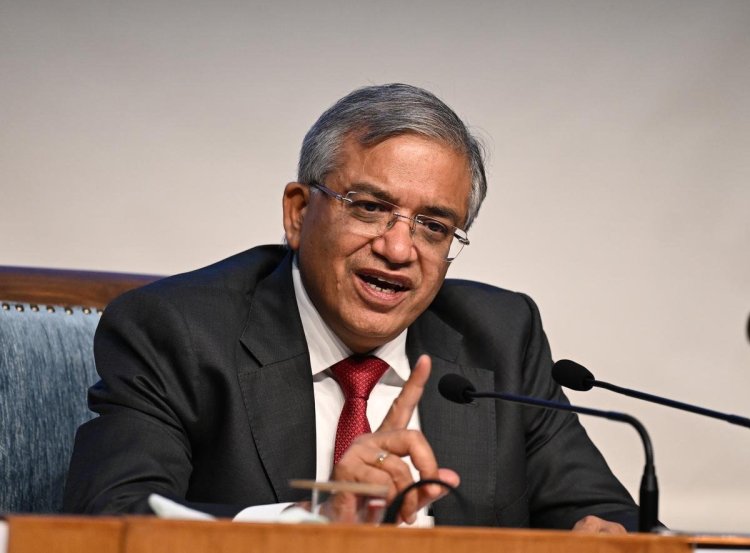
India is the world's largest democracy, where millions of people participate in elections to choose their representatives. Behind every election is a huge administrative system that must work carefully to ensure that the process runs according to the Constitution and election laws. At the centre of this responsibility is the Chief Election Commissioner of India.
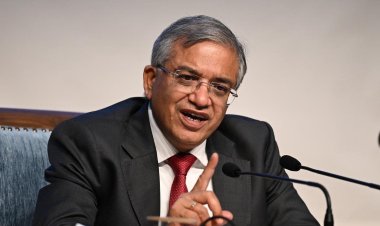
Gyanesh Kumar became India's 26th Chief Election Commissioner on 19 February 2025. Before reaching this important constitutional position, he spent decades working in the Indian Administrative Service, serving in Kerala and holding senior responsibilities in several Union government ministries. His career has included work related to defence production, Jammu and Kashmir, parliamentary affairs and the cooperative sector.
His professional journey offers a look at how a civil servant can move through different areas of government administration before taking charge of an institution responsible for conducting elections in the world's largest democracy.
Who Is Gyanesh Kumar?
Gyanesh Kumar is a retired 1988-batch Indian Administrative Service officer from the Kerala cadre and the 26th Chief Election Commissioner of India. He took charge of the position on 19 February 2025, succeeding Rajiv Kumar.
His career has covered both state and central government administration. During his years in Kerala, he served in several administrative positions, including District Collector of Ernakulam and Municipal Commissioner of the Corporation of Cochin. Later, he held senior posts in the Ministry of Defence, Ministry of Home Affairs, Ministry of Parliamentary Affairs and Ministry of Cooperation.
Unlike someone who enters public life through elections, Kumar built his career as a career civil servant. His responsibilities expanded over time, eventually bringing him to the constitutional institution that oversees elections in India.
Education: From IIT Kanpur to Public Administration
Education played an important role in Gyanesh Kumar's professional journey. He completed a Bachelor of Technology degree in Civil Engineering from the Indian Institute of Technology (IIT) Kanpur. His graduating batch is listed by the institute as BT/CE/1985.
His studies did not end with engineering. He also studied Business Finance at ICFAI in India and Environmental Economics through the Harvard Institute for International Development (HIID) in the United States.
These qualifications brought together technical education, financial understanding and knowledge of environmental economics. However, his later career was shaped by a different challenge: applying administrative experience to complex public responsibilities.
IIT Kanpur's official alumni profile records his journey from the institute to senior public service. The institution also honoured him with its Distinguished Alumni Award in 2025, recognising his contributions in public administration and electoral governance.
Entry into the Indian Administrative Service
Gyanesh Kumar joined the Indian Administrative Service as part of the 1988 batch and was allocated the Kerala cadre. The IAS is one of India's leading civil services, with officers responsible for implementing government policies, managing public administration and coordinating essential services.
For an IAS officer, the early years often involve direct engagement with district-level administration and local government. Such assignments require dealing with everyday public needs, coordinating departments and understanding how government decisions affect people on the ground.
Kumar's early career in Kerala gave him experience across different administrative institutions. Over time, he moved from local and district-level responsibilities to senior state government roles and then to the central government.
His Early Career in Kerala
Kumar held several important positions in the Kerala government. These included serving as Sub Collector of Adoor, District Collector of Ernakulam and Municipal Commissioner of the Corporation of Cochin.
He also served as Managing Director of the Kerala State Development Corporation for Scheduled Castes and Scheduled Tribes, Managing Director of the Kerala State Cooperative Bank and Secretary of the Goshree Islands Development Authority. His other assignments included the Trivandrum Airport Development Society and serving as Resident Commissioner of Kerala House in New Delhi.
These positions involved different aspects of governance, from municipal administration and district management to cooperative banking and development projects.
As a secretary in the Kerala government, Kumar handled departments and programmes related to finance resources, fast-track projects, public works, modernising government services, and food, civil supplies and consumer affairs.
Working across these areas provided him with experience in public infrastructure, administration, service delivery and government coordination. It also prepared him for responsibilities that would later extend beyond a single state.
Moving to the Central Government
Kumar's career subsequently expanded to the Union government, where he took on responsibilities involving national-level administration.
He served as Joint Secretary in the Ministry of Defence, working in the area of defence production. According to his official profile, his work included efforts to upgrade defence shipyards.
He later moved to the Ministry of Home Affairs, where he served as Joint Secretary and Additional Secretary. This was one of the most significant phases of his career because his responsibilities coincided with major developments concerning Jammu and Kashmir and Ayodhya.
Working in the central government requires coordination between ministries, officials, security agencies and other institutions. These roles can involve complicated legal, political and administrative questions, particularly when decisions have far-reaching consequences for the country.
Kumar's experience in these ministries became an important part of the background to his later senior appointments.
Gyanesh Kumar and Article 370
One of the most widely discussed parts of Gyanesh Kumar's administrative career relates to Jammu and Kashmir.
In 2019, the Union government made the decision to end Jammu and Kashmir's special constitutional status under Article 370 and reorganise the former state into two Union Territories: Jammu and Kashmir, and Ladakh.
Kumar was serving in the Ministry of Home Affairs during this period and was associated with the government's work relating to Jammu and Kashmir. His responsibilities included administrative matters connected with the region during a period of major constitutional and political change.
The decision surrounding Article 370 remains an important subject in India's political and constitutional debate. Supporters have argued that it strengthened integration and enabled uniform application of laws, while critics have raised concerns about federalism, civil liberties and the manner in which the decision was implemented.
It is important to distinguish Kumar's administrative role from the broader political decision itself. His position placed him within the government machinery involved in handling matters related to the region, but the policy decision was made by the Union government and Parliament.
His Role in the Ayodhya Developments
Another significant chapter of Kumar's service in the Ministry of Home Affairs involved developments following the Supreme Court's November 2019 judgment in the Ayodhya title dispute.
The judgment directed the establishment of a trust to oversee the construction of a Ram temple at the disputed site and provided for an alternative five-acre plot for a mosque. The Union government subsequently established the Shri Ram Janmabhoomi Teerth Kshetra Trust in 2020.
Kumar was associated with the government's administrative work relating to the formation of the trust. This responsibility came during a period when the Ayodhya issue remained highly significant in India's legal, religious and political landscape.
The Supreme Court's judgment and the government's subsequent actions were major developments in the country's public life. Kumar's involvement was part of his wider administrative responsibilities in the Home Ministry.
Secretary in the Ministry of Parliamentary Affairs
In February 2021, Kumar was appointed Secretary in the Ministry of Parliamentary Affairs.
The ministry plays an important role in coordinating the government's legislative business with Parliament. Its work involves facilitating communication between government ministries and parliamentary institutions, helping manage legislative schedules and supporting the smooth conduct of parliamentary proceedings.
This role required experience in government coordination and an understanding of how the executive branch works with the legislature.
For a senior civil servant, parliamentary affairs is a different kind of responsibility from district administration or internal security. It involves working within established constitutional procedures and ensuring that government business is coordinated through the parliamentary system.
Secretary in the Ministry of Cooperation
Kumar later became Secretary in the newly established Ministry of Cooperation, taking charge in May 2022.
The ministry was created to strengthen the cooperative movement in India. Cooperatives are organisations owned and operated by their members, often working in areas such as agriculture, banking, dairy, credit, marketing and rural development.
India has a long history of cooperative institutions, particularly in rural communities. For many people, cooperatives provide access to credit, markets, agricultural services and other economic opportunities.
During Kumar's tenure, the ministry worked on measures aimed at strengthening the cooperative sector. These included the Multi-State Cooperative Societies (Amendment) Act, 2023, and the development of national-level cooperative organisations in areas such as seeds, organic products and exports.
His tenure also coincided with the launch of the CRCS-Sahara Refund Portal, which enabled eligible depositors of specified Sahara Group cooperative societies to submit claims for refunds.
These initiatives formed part of the government's broader effort to develop and improve the cooperative sector. Their implementation and outcomes have also been matters of public interest because they affect institutions and people across the country.
Kumar retired from government service on 31 January 2024 after serving as Secretary in the Ministry of Cooperation.
Appointment as Election Commissioner in 2024
Retirement from the IAS did not mark the end of Kumar's public service.
On 14 March 2024, a selection committee led by Prime Minister Narendra Modi selected Gyanesh Kumar and Sukhbir Singh Sandhu for the two vacant Election Commissioner positions. President Droupadi Murmu subsequently appointed them, and Kumar took charge as Election Commissioner on 15 March 2024.
Their appointments were among the first made under the Chief Election Commissioner and Other Election Commissioners (Appointment, Conditions of Service and Term of Office) Act, 2023.
The selection process attracted political debate. Opposition representatives raised objections to the process and questioned the exclusion of the Chief Justice of India from the selection committee under the new law. The government proceeded with the appointments under the legislation then in force.
Kumar joined the Election Commission at a particularly important time. India was preparing for the 2024 Lok Sabha elections, one of the largest democratic exercises in the world.
As an Election Commissioner, he served during the general election and subsequent Assembly elections, including those in Jammu and Kashmir, Haryana, Maharashtra, Jharkhand and Delhi.
Becoming India's 26th Chief Election Commissioner
On 17 February 2025, the government issued the notification appointing Gyanesh Kumar as Chief Election Commissioner, effective from 19 February 2025. He became the 26th person to hold the office and succeeded Rajiv Kumar.
The Chief Election Commissioner heads the Election Commission of India, a constitutional authority responsible for administering elections to the Lok Sabha, Rajya Sabha, state legislative assemblies, and the offices of the President and Vice-President.
This responsibility is central to the functioning of Indian democracy. Elections involve far more than polling day. The process includes preparing and updating electoral rolls, coordinating election officials, announcing schedules, enforcing the Model Code of Conduct, overseeing polling arrangements and counting votes, and responding to complaints in accordance with election law.
The Commission must also work with state administrations, police forces, political parties, candidates and millions of voters. Conducting elections across India's varied geography and population requires extensive planning and coordination.
In his message after taking charge, Kumar emphasised the importance of voting and encouraged every eligible citizen aged 18 and above to register as an elector and participate in elections.
What Does the Chief Election Commissioner Actually Do?
The office of the Chief Election Commissioner carries constitutional responsibility, not simply administrative authority.
The Election Commission of India derives its constitutional foundation from Article 324. It is responsible for the superintendence, direction and control of elections within its jurisdiction.
The Chief Election Commissioner leads the Commission, which functions as a multi-member body. The office involves overseeing the institution's work and helping ensure that elections are conducted according to the Constitution and applicable laws.
Some of the major responsibilities associated with the Election Commission include:
-
Supervising the conduct of national and state elections.
-
Overseeing electoral rolls and voter registration processes.
-
Coordinating election schedules and polling arrangements.
-
Monitoring compliance with election rules and the Model Code of Conduct.
-
Working with election officials and relevant authorities to address complaints.
-
Supporting the transparency, accessibility and credibility of the electoral process.
The Commission's independence and impartiality are essential to public confidence. Voters must be able to trust that election rules are applied fairly and that their votes are counted according to the law.
Challenges and Public Scrutiny as Chief Election Commissioner
The position of Chief Election Commissioner is not without challenges. Decisions about election schedules, electoral rolls, campaign rules and complaints can attract intense political attention.
During Kumar's tenure, the Election Commission's handling of voter-list revisions and its responses to allegations from opposition parties became subjects of public debate. The Special Intensive Revision (SIR) of electoral rolls, in particular, attracted scrutiny over the process of verifying voter details and the possible effect of additions or deletions on eligible voters.
Opposition parties raised concerns about fairness and transparency, while the Election Commission maintained that electoral-roll revision is intended to improve the accuracy of voter lists and is governed by applicable law and procedures.
Such disputes highlight a wider democratic challenge: the Commission must balance accurate voter registration with the protection of every eligible citizen's right to vote. Clear procedures, accessible information, timely grievance redressal and transparent communication are important to maintaining public trust.
These issues should be assessed through official records, applicable law, court proceedings and independently verified evidence rather than political allegations alone.
Leadership, Experience and Administrative Background
Kumar's career is notable for the range of institutions in which he has served. His work has included district administration in Kerala, defence production, internal administration in the Home Ministry, parliamentary affairs and the cooperative sector.
That breadth of experience gives context to his rise to the Election Commission. However, experience in government administration and success as the head of an independent constitutional institution are not exactly the same thing. The latter also requires public confidence, impartial decision-making and accountability to the Constitution.
For the Election Commission, the ultimate measure of its work is not simply the number of elections conducted. It is also whether the electoral process is accessible, credible and fair to voters, candidates and political parties.
As Chief Election Commissioner, Kumar's decisions are therefore important not only for the administration but also for the public's confidence in India's democratic institutions.
Personal Life and Family
Gyanesh Kumar is a public servant whose professional career is documented through official biographies and government records. Public reporting has also described his family as including daughters working in the civil services.
Beyond these publicly reported details, verified information about his private life is limited. It is more responsible to focus on his education, career, public responsibilities and decisions made in his official capacity than to repeat unverified personal claims.
This distinction matters when writing about public figures: a biography should provide readers with useful context without treating rumours or private speculation as established fact.
Awards and Recognition
In 2025, IIT Kanpur honoured Kumar with its Distinguished Alumni Award. The recognition acknowledged his contributions to public administration and electoral governance.
The award also reflected his long professional journey from engineering education to senior roles in the Indian government and the Election Commission.
A Career Spanning Several Institutions
Gyanesh Kumar's journey from IIT Kanpur to the Indian Administrative Service, through state and central government roles, and ultimately to the office of Chief Election Commissioner spans several decades of public service.
His career has brought him into contact with some of India's most consequential administrative and constitutional developments, including matters relating to Jammu and Kashmir, Ayodhya, parliamentary affairs and the cooperative sector..
Today, the importance of his office goes beyond his personal career. The Chief Election Commissioner leads an institution on which millions of citizens depend to exercise their democratic rights. The Commission's credibility rests on its ability to follow the law, protect eligible voters, address complaints fairly and maintain public confidence..
For readers seeking to understand Gyanesh Kumar, his biography is not just a list of government appointments. It is also an opportunity to understand the responsibilities of the Election Commission and why impartial, transparent election administration matters in a democracy..