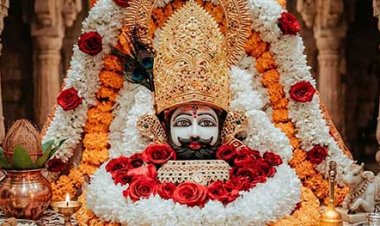
The Inspiring Story of Khatu Shyam Ji: From Barbarik to the God of Kaliyuga
Discover the inspiring story of Khatu Shyam Ji, from Barbarik's sacrifice in the Mahabharata to his divine blessing as the God of Kaliyuga.
 charchachowk
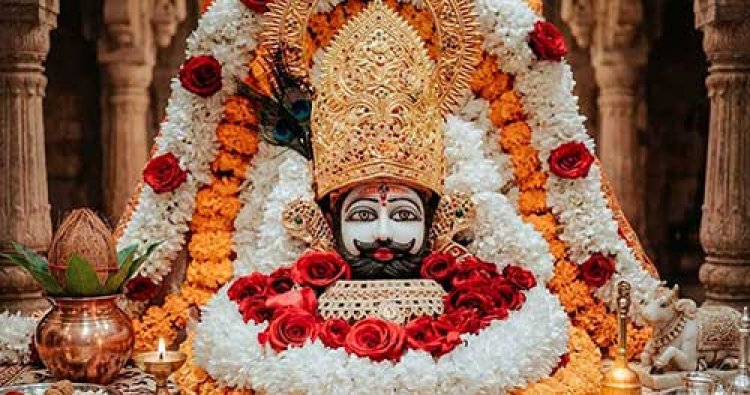
Have you ever felt that when life becomes difficult, a little faith can give you the strength to begin again? For millions of devotees, Khatu Shyam Ji represents that very hope. Known lovingly as Baba Shyam, He is worshipped as a symbol of compassion, sacrifice, and unwavering faith.
The story of Khatu Shyam Ji begins in the great Indian epic, the Mahabharata. It is the story of a brave warrior named Barbarik, whose extraordinary sacrifice earned him a divine blessing from Lord Krishna. Even today, devotees remember Him with love and devotion, believing that Baba Shyam stands beside those who feel defeated or helpless.
Let us explore the inspiring story of Khatu Shyam Ji, His connection with the Mahabharata, the meaning of His sacrifice, and the history of the famous Khatu Shyam Temple in Rajasthan.
Who Is Khatu Shyam Ji?

Khatu Shyam Ji is worshipped by devotees as the divine form of Barbarik, the grandson of Bhima and the son of Ghatotkacha, according to popular Mahabharata traditions.
Barbarik was known for his courage, extraordinary archery skills, and commitment to keeping his promises. His story became especially meaningful because he chose sacrifice over personal glory.
According to Hindu tradition, Lord Krishna blessed Barbarik that in Kaliyuga, he would be worshipped by the name Shyam, one of Krishna's names.
Today, devotees know Him by several loving names, including Baba Shyam, Khatu Naresh, and Sheesh Ke Daani. He is also widely remembered as "Hare Ka Sahara," meaning the support of those who have lost hope or feel defeated.
For many people, devotion to Khatu Shyam Ji is not simply a religious practice. It is a personal source of courage, comfort, and hope during life's most challenging moments.
The Birth and Childhood of Barbarik
The story of Khatu Shyam Ji takes us back to the time of the Mahabharata.
Barbarik was born into a family known for its bravery and strength. As the son of Ghatotkacha and grandson of Bhima, he belonged to the Pandava lineage.
From an early age, Barbarik was associated with courage, discipline, and a deep sense of duty. Popular devotional accounts describe him as an exceptional warrior who received powerful weapons and mastered the art of archery.
He became famous for his three extraordinary arrows, commonly known as the Teen Baan. According to tradition, these arrows possessed immense power and could accomplish in moments what ordinary warriors could not achieve in an entire battle.
However, what makes Barbarik's story remarkable is not merely his strength. It is the principle he chose to follow.
Before leaving for the great war of Kurukshetra, Barbarik promised his mother that he would always support the side that was weaker or losing. He believed that the suffering side deserved his protection.
It was a noble promise, made with good intentions. Yet, as the story unfolds, this very promise would create an extraordinary dilemma.
Why Did Lord Krishna Test Barbarik?

When the Mahabharata war between the Pandavas and the Kauravas was about to begin, Barbarik decided to travel to Kurukshetra and witness the battle.
Lord Krishna understood Barbarik's extraordinary abilities and learned about his promise to support the losing side.
Krishna realised that Barbarik's vow could create a serious problem. If he joined whichever side was losing, the balance of the war would keep changing. Each time one side gained the advantage, Barbarik would be bound by his promise to support the other.
According to the popular story, this could result in a continuous cycle of conflict rather than a decisive end to the war.
To understand Barbarik's abilities and intentions, Lord Krishna approached him in the disguise of a Brahmin.
Krishna questioned whether Barbarik truly possessed the strength to influence such a great war. Barbarik confidently demonstrated his archery skills, showing that his three arrows were no ordinary weapons.
Krishna was impressed by his power, but He also understood that great strength must be guided by wisdom.
The encounter became a turning point in Barbarik's life. It would lead to a decision remembered by devotees for generations.
The Greatest Sacrifice: Barbarik's Sheesh Daan
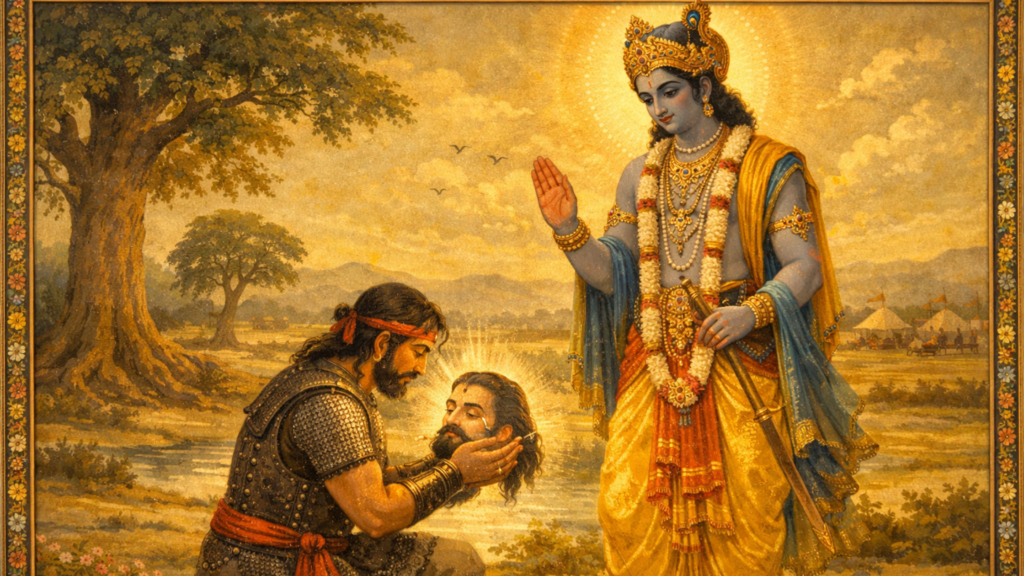
One of the most emotional parts of the Khatu Shyam Ji story is the episode known as Sheesh Daan, or the offering of one's head.
According to popular Hindu tradition, Lord Krishna asked Barbarik for his head as a donation before the Mahabharata war.
For an ordinary warrior, such a request would have been impossible to accept. Barbarik, however, was devoted to truth and the fulfilment of his word.
He understood that the request was extraordinary. According to the devotional account, he agreed to make the sacrifice after asking the mysterious Brahmin to reveal His true identity.
Lord Krishna then revealed His divine form.
Barbarik realised that the person before him was none other than Lord Krishna, and he willingly offered his head in devotion.
This act is remembered as Sheesh Daan. It represents the highest form of sacrifice in the traditional story: giving up even one's life when called upon by the divine.
Before making his sacrifice, Barbarik expressed a final wish. He wanted to witness the great Mahabharata war.
Lord Krishna granted this wish. According to popular tradition, Barbarik's head was placed on a hill from where he could observe the entire battle.
His body was sacrificed, but his devotion and the blessing he received became the foundation of the identity by which millions would remember him.
Why Did Lord Krishna Name Barbarik as Shyam?
Lord Krishna was deeply pleased by Barbarik's devotion and sacrifice.
According to the traditional account, Krishna blessed him that in Kaliyuga, people would worship him by the name Shyam.
This blessing gave rise to the devotional identity of Khatu Shyam Ji.
The name Shyam is associated with Lord Krishna, and the blessing connected Barbarik's sacrifice with a lasting place in Hindu devotional tradition.
This is why devotees lovingly call him Baba Shyam and seek his blessings during difficult times.
His story also carries a deeper lesson. Courage is valuable, but courage guided by wisdom is even greater. Strength becomes meaningful when it serves a purpose beyond personal victory.
For devotees, Barbarik's sacrifice represents surrender, humility, and faith. It reminds them that devotion is not measured only by what a person receives, but also by the sincerity with which they live and make difficult choices.
How Was Khatu Shyam Ji Discovered in Rajasthan?
The story of Khatu Shyam Ji does not end with the Mahabharata. According to local religious tradition, it continues centuries later in the village of Khatu in Rajasthan.
Popular accounts say that Barbarik's head eventually came to be buried in the area that is now associated with Khatu Shyam Ji.
Many years later, a remarkable incident drew attention to a particular spot in the village. A cow was said to release milk spontaneously at that location, leading people to believe that something sacred lay beneath the ground.
When the place was excavated, the buried head was reportedly discovered.
Another part of the traditional account describes a dream experienced by King Roopsingh Chauhan, in which he was instructed to establish a shrine for the divine head.
Following these events, a place of worship was established, and the village gradually became an important centre of devotion.
These accounts form an important part of the religious history and local beliefs associated with Khatu Shyam Ji. They explain why the temple is considered more than a place of worship by devotees: it is seen as the fulfilment of Lord Krishna's blessing to Barbarik.
Khatu Shyam Temple: A Sacred Place of Faith
The famous Khatu Shyam Ji Temple is located in Khatu village in the Sikar district of Rajasthan, India.
Every year, devotees from different parts of India travel to the temple to seek Baba Shyam's blessings. Some arrive with their families, some come to fulfil a religious vow, and others visit simply to find peace and express gratitude.
For many devotees, the journey itself is an expression of faith.
The temple is especially known for its devotional atmosphere, prayers, aarti, and the gathering of pilgrims during major religious occasions. The nearby Shyam Kund is also associated with the traditional account of the discovery of Barbarik's head.
The annual Phalgun Mela is among the most important occasions connected with Khatu Shyam Ji. During this period, the town welcomes large numbers of devotees who come to offer prayers and participate in religious celebrations.
The temple's significance lies not only in its architecture or location but also in the emotional connection people feel with Baba Shyam.
For a devotee going through uncertainty, standing before the deity can be a deeply personal experience. It offers a moment to pause, reflect, pray, and find the strength to continue.
Why Is Khatu Shyam Ji Called Hare Ka Sahara?
One of the most familiar expressions associated with Baba Shyam is "Hare Ka Sahara."
The phrase can be understood as the support of those who have been defeated, disappointed, or left feeling helpless.
This name reflects the central emotional message of Barbarik's story. He is remembered not only as a mighty warrior but also as a figure whose divine identity became associated with compassion and hope.
People pray to Khatu Shyam Ji for strength during difficult periods, guidance when facing uncertainty, and peace when life does not go according to plan.
Of course, every person's struggles are different. Faith does not mean that life will always become easy or that every wish will be fulfilled exactly as expected. For many devotees, faith instead provides the patience to face hardship and the courage to keep moving forward.
That is one reason the words "Hare Ka Sahara" hold such a special place in Shyam devotion.
They remind people that defeat does not have to be the end of their journey.