Israel Election Exit Polls: Is Netanyahu Set to Lose?
Israel election exit polls show a close contest between Benjamin Netanyahu and Gadi Eisenkot. Find out why forming the next government could be difficult.
 charchachowk
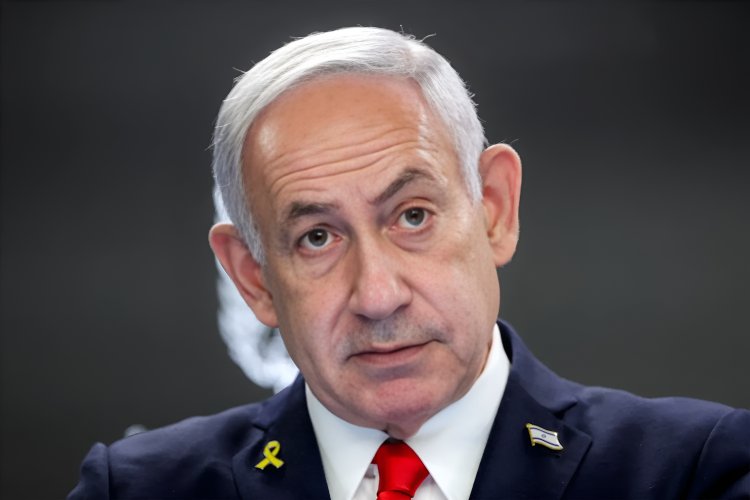

Israel’s latest election exit polls have delivered a political setback for Benjamin Netanyahu, but the race remains too close to call. With rival Gadi Eisenkot gaining ground, neither side appears certain of securing the 61 seats needed to form a government.
Israel’s political future remains uncertain as exit polls point to a closely fought contest between Prime Minister Benjamin Netanyahu’s alliance and the opposition bloc led by Gadi Eisenkot. While early projections gave Eisenkot a slight advantage, subsequent updates showed Netanyahu’s camp recovering ground, leaving the outcome far from settled.
For Netanyahu, the numbers could make the path to another government more complicated. For the opposition, the results offer a possible opportunity for political change, although forming a stable government may prove just as challenging.
Israel Election Exit Polls: A Close Contest

Initial exit polls from Israel’s three major television channels projected around 52 seats for Eisenkot’s alliance and 50 for Netanyahu’s bloc. However, later estimates narrowed the gap.
According to the figures cited in the reports:
- Channel 12: Netanyahu’s bloc was projected to win 52 seats, compared with 49 for Eisenkot’s alliance.
- Channels 13 and 11: Both sides were projected to secure 51 seats each.
- i24NEWS: Netanyahu’s alliance was projected to win 55 seats, while Eisenkot’s bloc was expected to secure 49.
- Channel 14: Netanyahu’s camp was projected to win 60 seats, with Eisenkot’s alliance at 43.
These varying projections highlight just how uncertain the political picture remains. Exit polls provide an early indication of voter preferences, but they are not official election results.
Netanyahu’s Likud Remains a Major Force
Despite the intense challenge from the opposition, Netanyahu’s Likud party appears to remain one of the strongest political forces in the country.
According to the reported exit-poll estimates, Likud was projected to win around 24 to 25 seats in several polls, while Channel 14 gave the party a significantly higher estimate of 30 seats.
This suggests that Netanyahu continues to command considerable support among Israeli voters. However, winning the largest number of seats for a single party does not automatically guarantee the right to form a government.
Israel follows a parliamentary system in which parties must build a coalition capable of commanding a majority in the Knesset, the country’s 120-member parliament.
Why Forming the Next Government Could Be Difficult
The biggest challenge for both political camps is reaching the majority threshold of 61 seats.
Based on the exit-poll projections cited in the reports, Netanyahu’s alliance may fall short of that number. Even if Likud emerges as the largest individual party, Netanyahu could struggle to secure enough support from other parties to form a governing coalition.
Eisenkot’s position is not necessarily easier. Although his alliance could emerge ahead in some projections, it may need support from Arab parties to build a government.
That possibility could create political complications, particularly if some of his potential partners refuse to support a coalition that depends on Arab lawmakers.
In other words, the election may not simply come down to who wins more seats. The decisive question will be which leader can persuade enough parties to work together.
Both Leaders Claim Victory

Despite the uncertainty, both Netanyahu and Eisenkot have expressed confidence in their respective positions.
According to reports cited by Axios, Eisenkot claimed victory in a speech delivered after midnight. He also suggested that Netanyahu should step away from politics if he respected the public’s desire for change.
Netanyahu, meanwhile, maintained that the right-wing camp enjoys substantial support among Jewish Israeli voters and called for the formation of a strong right-wing government, according to Haaretz.
Their competing statements reflect the political stakes of the election. For Netanyahu, the contest could determine whether he remains at the centre of Israeli politics. For Eisenkot, it could provide an opportunity to lead a new political direction.
However, political claims made on election night do not settle the outcome. The final results and subsequent coalition negotiations will determine who can actually govern.
Voter Turnout Reaches a High Level
Another notable feature of the election was the reported voter turnout of 77.7 per cent.
According to the figures attributed to Israel’s election authorities, this was the highest turnout since 1999. NBC News also reported that approximately 5.7 million people cast their votes, representing an increase of around 7.1 per cent compared with the 2022 election.
The strong turnout points to significant public engagement at a critical moment for the country.
Israel has faced major security and political challenges following the Hamas-led attacks of October 7, 2023, and the subsequent wars and military operations involving Gaza, Lebanon and Iran. These developments have kept security, leadership and the country’s future direction at the centre of public debate.
For many voters, the election represents more than a contest between political parties. It is also a decision about the leadership and policies that will shape Israel’s next chapter.
Until the official results are confirmed and coalition negotiations progress, it would be premature to declare either Netanyahu or Eisenkot the winner.
Even if one alliance finishes ahead of the other, it will still need sufficient parliamentary support to form a government. If neither side reaches the required majority, negotiations with smaller parties could become decisive.
Netanyahu is expected to remain caretaker prime minister until a new government takes office, as reported by Al Jazeera.
The coming days could therefore be just as important as election night itself. Political alliances, negotiations and the willingness of smaller parties to cooperate may ultimately determine who leads the country.